

| Situation | Supported guidance | Planning use |
|---|---|---|
| Yoga and lifting on the same day | Yoga placed after the strength session | Lift first, then use yoga as the closing block of the session. |
| Separate sessions on the same day | At least a few hours between them | Split only when the schedule allows a real gap. Otherwise keep yoga last. |
| Intense yoga | Gym workouts and yoga sessions on alternate days | Treat vigorous flows as their own training day, not as a cooldown. |
| Rest day | Restorative yoga as active recovery | Use gentle, supported poses when no lifting is planned. |
| Pre-lifting poses | Holds of 6-10 seconds | Keep the movement short and flowing before the first working set. |
| Post-lifting poses | Holds of around 45-60 seconds | Slow down and stay longer in each cooldown pose. |
| Returning after surgery or severe injury | Clearance from a doctor or physical therapist first | Get medical sign-off before adding yoga to a lifting programme. |
The timing and hold figures come from guidance on combining yoga and gym sessions, and the clearance advice comes from a rehabilitation-focused yoga guide.
Yoga after weight training works best placed after the lifting session, using restorative poses and longer holds, while intense yoga gets its own day. Stay inside a pain-free range of motion throughout.
The sections below place specific poses around specific gym sessions, so the plan follows the muscles you trained rather than a generic list of benefits. For a single focused session, start with yoga after leg day and build outward from there.
Why yoga and strength training pair well
Yoga and strength training can sit in the same week and even the same day. A published yoga-and-gym FAQ answers the question plainly: yes, you can do yoga and gym together, where gym work means strength training sessions. The useful decisions are about order, spacing and intensity, and those are covered in the sections that follow.

What yoga adds to a lifting week
The same guidance names two practical contributions. Forward folds and twists can help to release tight muscles and improve joint mobility, which is the part of yoga lifters tend to want most. Yoga breathing techniques such as Ujjayi breath or Kapalbhati can also help you control your breath, which carries over to heavy lifts.
That makes yoga a good fit for lifters who finish sessions feeling tight or who lose composure in their breathing under load. It is a weaker fit for anyone hoping to drop barbell work altogether. A rehabilitation-focused guide describes yoga as only one tool within the wider recovery process, and that framing suits healthy lifters too. If you are weighing the two disciplines against each other, can yoga replace weight training compares them directly.
Who should adapt or wait
Anyone returning from surgery or a severe injury should wait for permission. The rehabilitation guide says to always get clearance from your doctor or physical therapist before you resume practising yoga. For everyone else, the working rule is a pain-free range of motion. Discomfort should never cross into sharp or pinching sensations, and if a movement creates an unproductive sensation, stop immediately.
The same guide recommends prioritising breathwork and core stability before attempting loaded end-range stretches. In practice, lifters who are stiff or recovering should earn the deepest positions gradually rather than forcing them in the first week of adding yoga.
Where yoga fits in the training week
Intensity decides where yoga belongs. Gentle and restorative practice can follow a lifting session, while vigorous practice needs its own slot. There is no fixed number of weekly sessions in the supporting guidance, so frequency should follow how recovered you feel and how hard the yoga is.
Straight after lifting
The guidance is to do your yoga after your strength training session when both happen on the same day. This is the simplest arrangement and the one that suits most lifters. The lifting session gets your freshest effort, and the yoga becomes the cooldown. Choose slow, supported poses here and leave strenuous flows for another day.
Later the same day
If you prefer a separate yoga session, leave at least a few hours between the two sessions. This arrangement suits people who train at lunchtime and practise in the evening. It does not suit a crowded schedule, because squeezing a hard class into a short gap defeats the purpose of spacing them.
On alternate days
When the yoga is intense, the same source says it is best to do gym workouts and yoga sessions on alternate days. Think of a vigorous vinyasa class as a training session in its own right. Lifters who enjoy hard classes should schedule them on non-lifting days and not tack them onto the end of a heavy session.
On rest days
Restorative yoga can be done on rest days as part of an active recovery session. A rest day in this sense still means no lifting. The poses are supported, the holds are long and the effort is low. Pairing this slot with the ideas in yoga for muscle recovery keeps rest days useful without turning them into a third workout.
Should you stretch before or after a workout?
Both, but in different styles. The guidance separates a short, flowing pre-workout use of yoga from a slower, longer post-workout one. The difference is mostly hold time and intent.
Before lifting: short holds
For a warm-up, the guidance is to hold yoga poses only for a short time of 6-10 seconds. The suggested warm-up poses are forward folds, cat-cow, cobra, boat and a warrior flow. The aim is to move through positions rather than sink into them, so you arrive at the bar with warm joints and a clear idea of your range. A longer, deeper static hold belongs after the session, not before it. A yoga warm up before workout can be built entirely from that pose list.
After lifting: longer holds
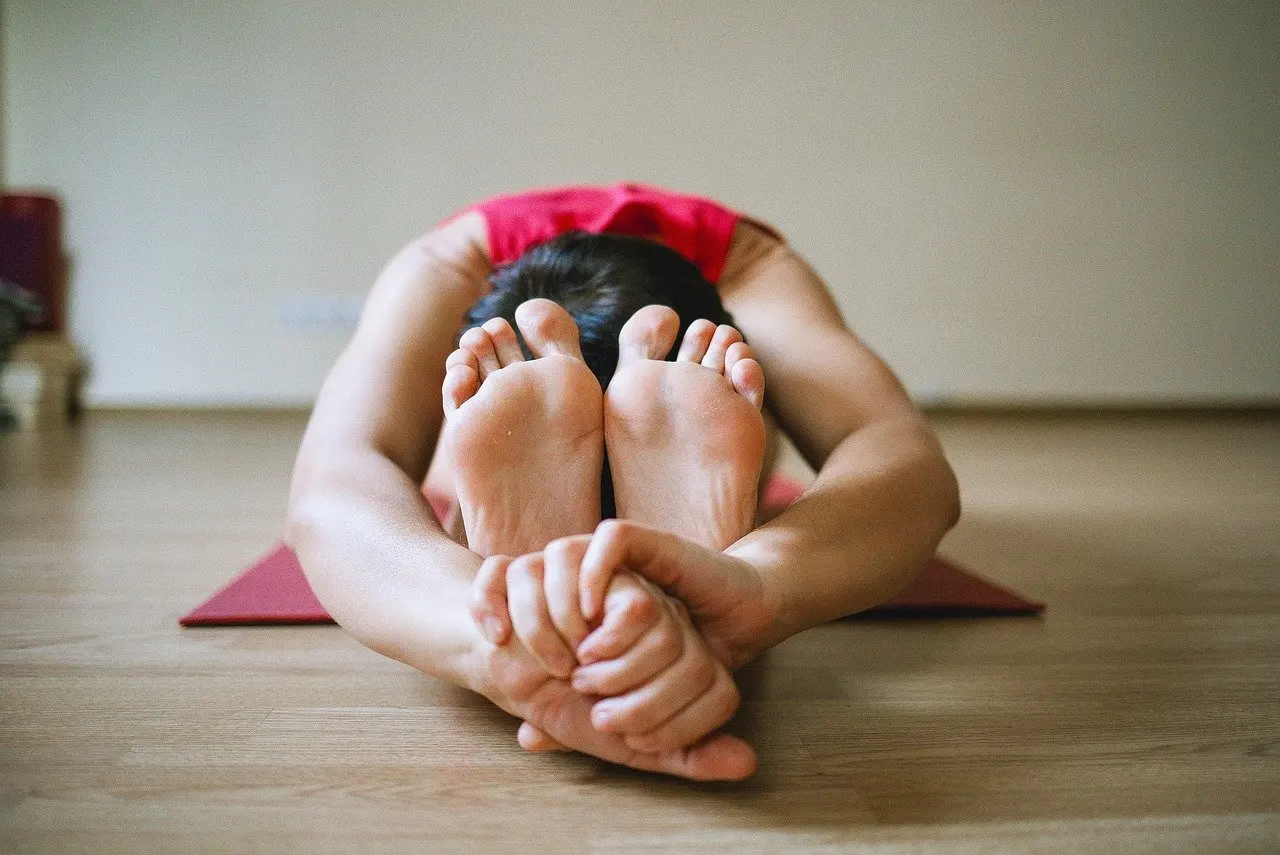
For a cooldown, the guidance is to focus on longer holding times of around 45-60 seconds. It recommends restorative and static stretching to relieve muscle tension and prevent soreness. Static stretching means settling into a position and staying there, and that is what each cooldown pose asks of you. Suggested poses are pigeon, bridge, child’s pose, downward dog and supine spinal twist. A full yoga cool down after workout can use the same list in a set order.
Can yoga replace a cooldown?
Yes, provided the yoga is built as a cooldown. A sequence of restorative and static poses held for the longer times above does the job a conventional cooldown does, and it adds breath work. A fast, demanding flow does not. That is intense yoga, and the earlier guidance puts it on alternate days from lifting. The test is simple: if your heart rate and effort are rising, it is a workout, and if they are settling, it is a cooldown.
A weekly plan by muscle group
The table below arranges the suggested poses around the muscles a session emphasised. It is a template built from the pose lists and hold times in the supporting guidance, not a prescription, so adjust it to your own split and recovery.
| Session | Yoga placement | Poses to prioritise | Hold style |
|---|---|---|---|
| Lower-body day | After lifting, as the cooldown | Pigeon, bridge, supine spinal twist | Around 45-60 seconds each |
| Upper-body day | After lifting, as the cooldown | Child’s pose, downward dog (modified as needed) | Around 45-60 seconds each |
| Core or full-body day | Short flow before lifting | Cat-cow, cobra, boat | 6-10 seconds per pose |
| Rest day | Standalone restorative session | Gentle, supported poses | Long, relaxed holds |
| Intense yoga day | Alternate day from lifting | Vigorous flow such as warrior sequences | Moving, not held |
The pose lists and hold times come from the yoga-and-gym guidance, and the modification note draws on the rehabilitation guide’s advice to use props where necessary.
Leg days
After squats, deadlifts and lunges, choose poses that fold forward, open the hips and release the lower back. Pigeon pose has you bring one shin across the mat in front of you, extend the other leg behind and lower the hips toward the floor. Bridge pose has you lie on your back with feet planted and lift the hips. A supine spinal twist finishes the lower body block, with you lying down and dropping both knees to one side.
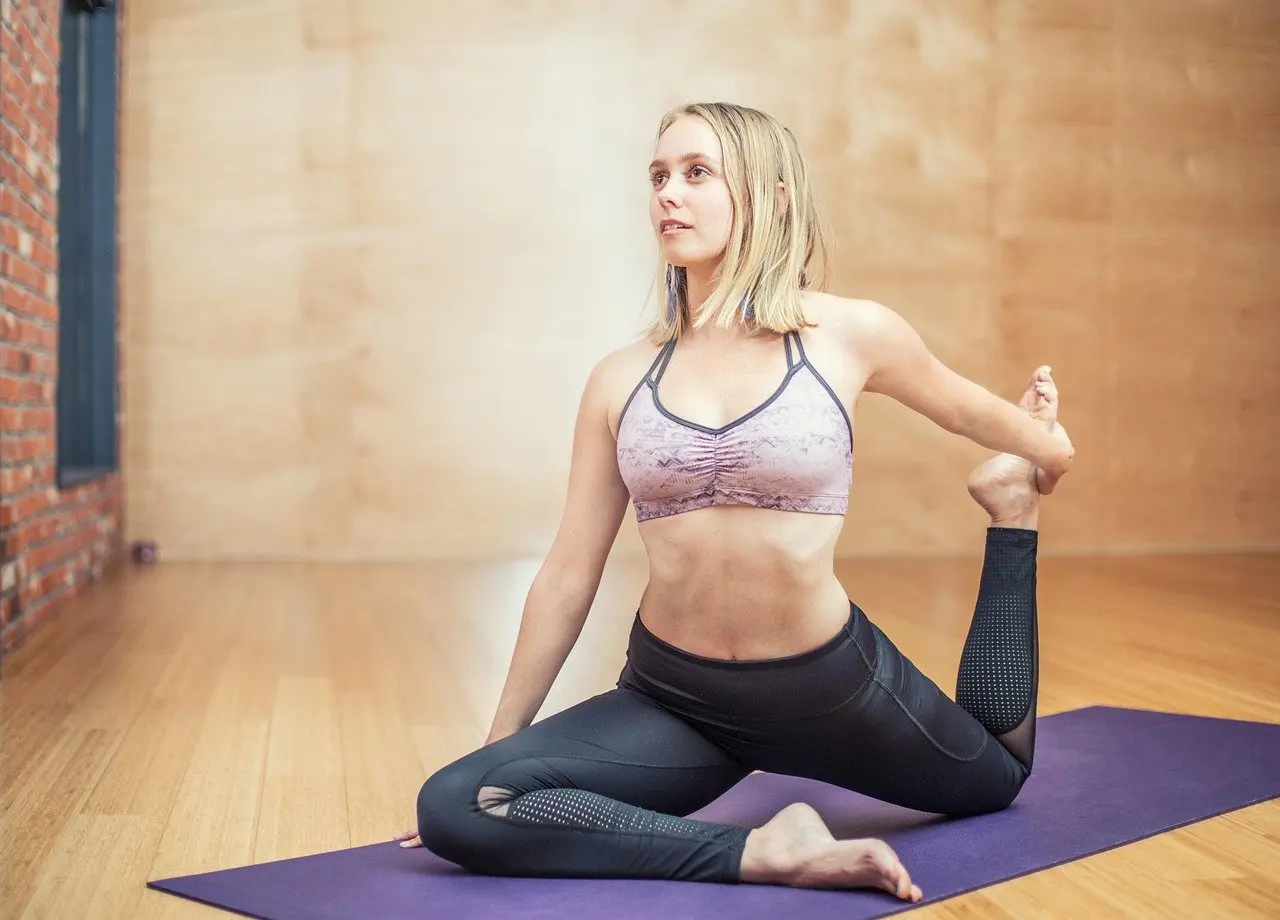
Forward folds and twists are the two pose families the guidance says can help release tight muscles and improve joint mobility. They are therefore the natural bookends for a leg day cooldown. Keep each pose to the longer cooldown holds and breathe slowly, because rushing through them wastes the point of staying put.
Upper-body and shoulder days
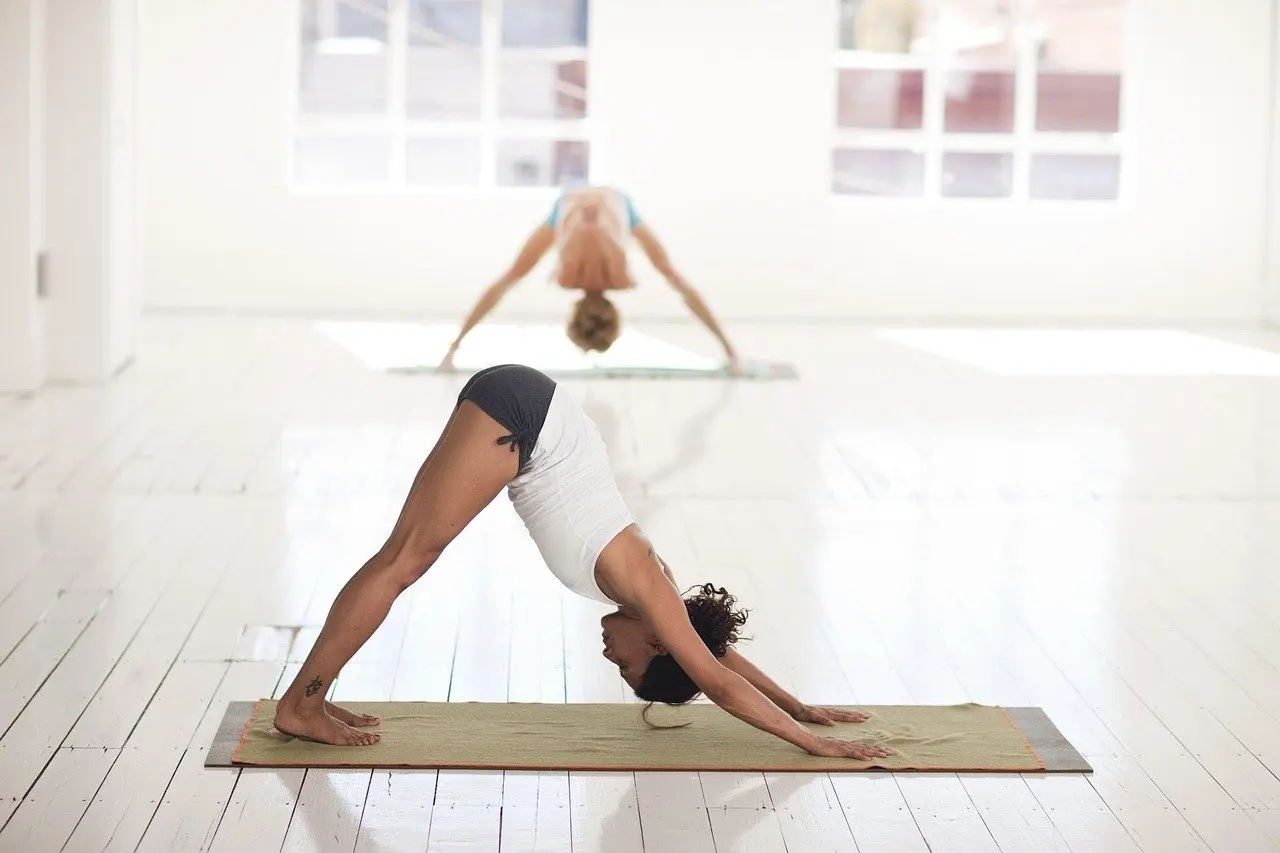
After pressing and pulling, child’s pose and downward dog are the suggested choices. In child’s pose you kneel, sit back toward your heels and fold forward with the arms extended. In downward dog, hands and feet are on the mat and the hips lift high, which asks a lot of the shoulders.
If the shoulders are cranky, modify. The rehabilitation guide suggests placing your hands on blocks wedged against a wall to reduce the angle of shoulder flexion. For people early in shoulder recovery, it says to avoid low push-ups like Chaturanga Dandasana entirely. Lifters who feel stuck overhead can pair this section with yoga for shoulder mobility, and those who carry tension up toward the head can use yoga for neck and shoulder tension.

Core and trunk days
Trunk-focused sessions suit a short flow before lifting rather than a long cooldown. Cat-cow has you move on hands and knees between an arched and a rounded spine. Cobra has you lie face down and lift the chest, and boat has you balance on your sitting bones with the legs raised. All three are on the suggested warm-up list, and each can be held for the short 6-10 second window.
Breath control matters here more than anywhere. The Ujjayi and Kapalbhati techniques the guidance mentions can help you control your breath during lifts, which suits heavy trunk work. Lifters who want to build that foundation further can read yoga for core strength.
Rest days
Rest days suit restorative yoga because it is the one option that does not compete with lifting for recovery. Pick supported, quiet poses and stay in each for a long time. If you have been working hard, this slot is also a sensible place to try new poses at low intensity before you add them to a post-lift cooldown.

Mobility, tight muscles and soreness
Yoga counts as mobility exercise when it improves how freely a joint moves, and forward folds and twists are the poses the guidance links to that effect. They release tight muscles and improve joint mobility, which makes them useful for lifters whose training leaves them stiff.
Tight muscles after the gym
For tightness after a session, the suggested cooldown set is the place to start: pigeon, bridge, child’s pose, downward dog and supine spinal twist. Match the pose to where the tightness sits. Hips and glutes after leg work point to pigeon and bridge. Shoulders and upper back after pressing point to child’s pose and a modified downward dog. Tightness at the front of the hips from sitting and training has its own routine in yoga for tight hip flexors.
Soreness after hard sessions
Delayed onset muscle soreness is the ache that can follow a demanding session. The guidance recommends restorative and static stretching after training to relieve muscle tension and prevent soreness. That is a recommendation for how to cool down, and it should be read as a sensible habit rather than a guarantee that soreness will never appear. If soreness is sharp, pinching or numbing instead of dull, treat it as a stop signal.
Flexibility is not the goal
Lifters do not need to chase extreme positions. The rehabilitation guide notes that prioritising long-term joint health over extreme flexibility ensures sustainable progress. In practice, that means stopping at the first honest stretch, not at the deepest version of the pose you can force. Better range will come from repetition. Standing at your limit and breathing is enough.
Posture is one of the most visible things lifters want to improve, and stiffness at the chest and hips often drives it. Yoga for posture correction applies the same hold-and-breathe approach to the way you stand and sit.
Adapting poses and knowing when to stop
Adapting a pose is part of doing it well, not a sign of weakness. The rehabilitation guide advises modifying every pose using props where necessary, and the lifting-friendly versions of yoga are the ones that respect that.
Use props and keep the range honest
Blocks, straps and a mat make deep positions reachable without forcing them. The shoulder example above, with hands on blocks against a wall in downward dog, shows how a prop changes the load on a joint rather than simply making the pose easier. A beginner-friendly overview of the kit is in yoga equipment for beginners, and clothing that lets you move through a full range is covered in what to wear to yoga.
Stop signals
Work exclusively within a pain-free range of motion. Sharp, pinching or numbing sensations mean the pose should end immediately. Dull stretching sensations that ease as you breathe are different and are the ones you can stay with. This distinction matters more for lifters than for casual stretchers, because heavy training can leave joints already loaded.
Linking yoga to injury prevention
Yoga can support training health by encouraging balance, breath and joint awareness, but it does not make a lifter injury-proof. The broader case is set out in yoga for injury prevention. Treat yoga as one part of the programme alongside sensible loading and rest, which echoes the rehabilitation guide’s description of yoga as one tool among several.
If lifting is not your only training
The placement rules above, with short holds before and longer holds after, apply to people who mix lifting with endurance work. Runners can use the same cooldown structure and should read yoga for runners for how it changes around cardio. Cyclists have their own pressure points and should see yoga for cyclists.
When several kinds of training share a week, count intense yoga as training load. The alternate-day guidance for vigorous sessions applies to any hard practice, so protect your key lifting or endurance sessions first and fit yoga around them.
Frequently asked questions
Is it all right to do yoga straight after lifting?
Yes. Placing yoga after the strength session is the guidance for same-day training, as long as the yoga is restorative and the holds are longer rather than a vigorous flow.
How long should each pose be held?
Warm-up poses are held for 6-10 seconds, and cooldown poses for around 45-60 seconds. The shorter holds keep you moving, and the longer ones let tight muscles settle.
Which poses suit a tight lower body?
Pigeon, bridge and supine spinal twist are the suggested cooldown poses most relevant to the hips and legs. Forward folds are also recommended for releasing tight muscles.
Can yoga count as a rest-day activity?
Restorative yoga can, because it works as active recovery on days without lifting. Vigorous yoga should be treated as a workout and scheduled on alternate days from gym sessions.
What if a pose hurts?
Stop if the sensation is sharp, pinching or numbing, and return only within a pain-free range of motion. After surgery or a severe injury, get clearance from a doctor or physical therapist first.