
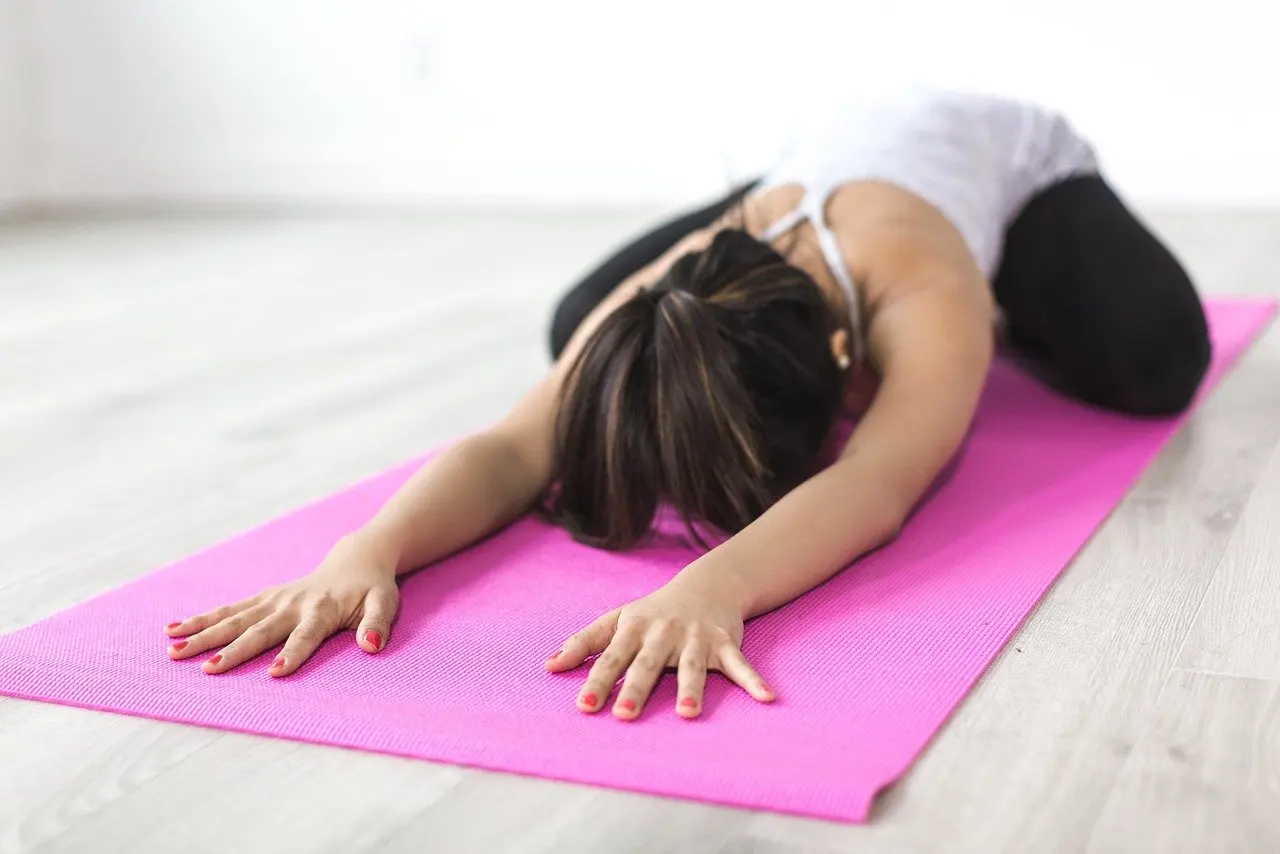
Yoga for stress relief works best when the practice fits the situation: slow breathing and brief meditation for everyday tension, supported rest poses for tired evenings, and a doctor’s approval first during pregnancy or when health conditions or medications are involved.
Picture a month with a looming deadline, a pregnancy in progress, or a move that has upended every routine. Each calls for a different kind of practice, and one generic list of benefits does not help much. This guide sorts yoga and mindfulness by situation, with safety notes in each section. Readers new to the mat can start with yoga for beginners, and anyone unsure which style to try can compare the types of yoga before booking a class.
Pick your route
Start with the situation that fits today rather than the pose that looks most impressive. The routes below are ordered from the most common starting point to the most specific, and each links to the section that develops it.
- Everyday tension and a busy mind. Begin with breathing exercises and a few minutes of seated meditation. This route needs no equipment and suits almost anyone who has cleared the practice with a doctor where a health condition applies.
- Pregnancy. Begin with a conversation with the doctor or midwife, then choose a class designed for pregnancy and led by a trained instructor.
- A major change. Choose practices that let you control the pace, such as short sessions, rest poses and mindfulness that you can pause at any moment.
- Later life, stiff joints or a sore back. Choose seated and supported options first, then add floor work if it feels comfortable.
- Restless nights. Move to evening sequences and the longer rest poses. The dedicated guide on yoga for sleep goes deeper on this route.
The routes overlap. Someone who is pregnant and changing jobs will use the breathing practice from the first route and the pacing advice from the third. Treat the order as a way to find your starting point, not a fixed path.
What stress is and what the research supports
A review in the National Library of Medicine’s PubMed Central archive defines stress as any form of change that creates emotional, psychological or physical strain. That definition explains why a life-stage approach makes sense. Pregnancy, a new job, a bereavement, a move and the shifts of later life are all changes, and each one can produce strain in a different part of the body or mind.
The same review describes yoga as promoting both physical and mental relaxation, which lowers anxiety and stress. It also reports a significant decrease in perceived stress and in backache with yoga, and notes that earlier qualitative research found yoga can help with depression and anxiety. For a longer discussion of what the practice offers beyond stress, see the guide to the benefits of yoga.
How to read these findings
The practical reading is that yoga is a reasonable, low-cost addition to a stress-management routine, particularly when strain shows up as muscle tension or racing thoughts. It is not a substitute for medical care. Anyone whose anxiety or low mood is persistent or disruptive should treat yoga as support alongside professional help, and the dedicated page on yoga for anxiety covers that situation in more detail.
The benefits also differ by stage. In early adulthood, the main gain is often a reliable way to switch off after work. During pregnancy, the gain is gentle movement with close attention to the body. In later life, it is steady, adaptable movement. The sections below follow that logic.
Everyday tension and a busy mind
For ordinary, ongoing stress, two tools do most of the work: breathing exercises and short periods of focused attention. Both can be done seated, in ordinary clothes, and neither requires flexibility. A review of yoga and stress notes that the postures, meditation and breathing exercises can be practised separately or combined into a single session, so a beginner can pick one element and add the others later.
Pranayama: breathing exercises for stress
Pranayama is the Sanskrit name for yoga’s breathing exercises. According to Healthline’s guide to yoga for stress, these exercises teach you to relax, regulate your breath and breathe deeply. The same guide lists popular types, including alternate nostril breathing, ujjayi, lion’s breath and humming bee breath.
For a first attempt, the choice between them is mainly about the setting. Humming bee breath and ujjayi are quiet and can be done almost anywhere. Lion’s breath is deliberately noisy and expressive, so it suits a private room. Alternate nostril breathing asks for a little coordination, so it is a better second technique than a first.
A slow, deep breath with a hand resting on the abdomen is a practical way to feel whether the breath is reaching low into the body or staying in the chest. Beginners usually find this easier to judge sitting or lying down than standing.
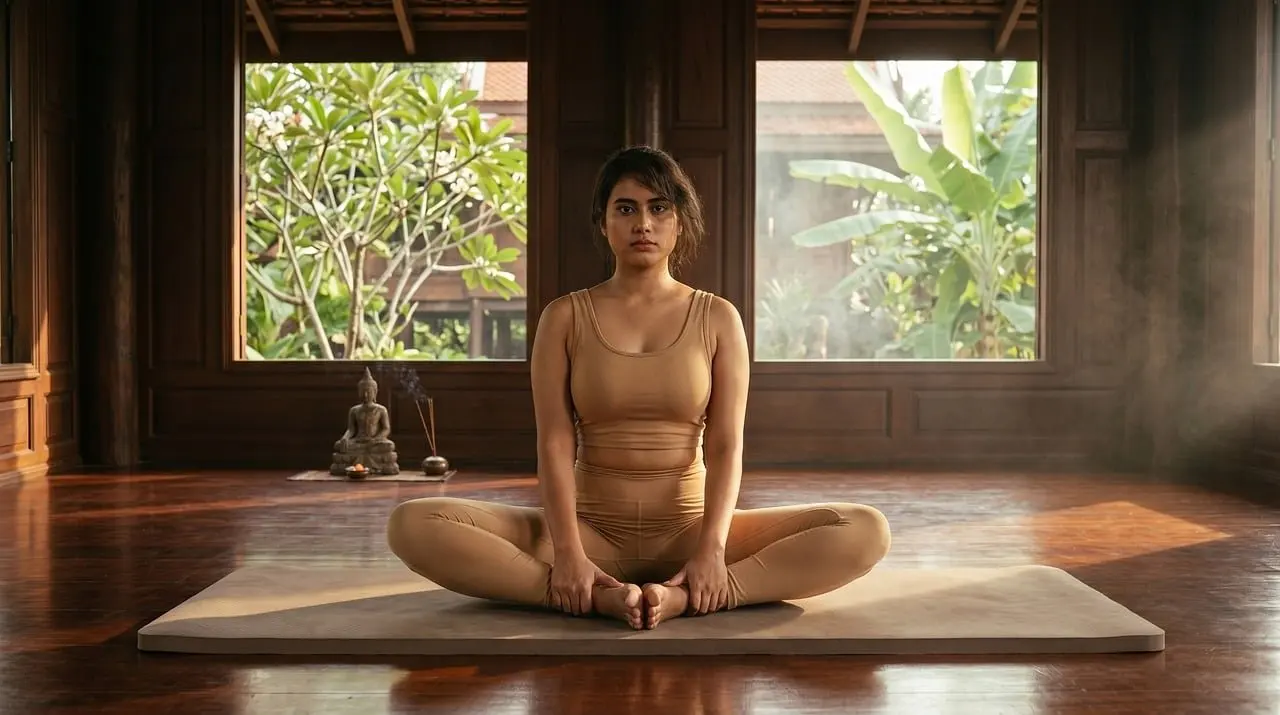
Breathing practice is also the quickest way to start calming the nervous system. A slower, deeper breath gives the body a clear task during a tense moment, which is why many people prefer it to trying to think their way out of stress. Since the research describes yoga as promoting physical and mental relaxation, pairing breath with a gentle posture is a sensible way to feel that effect.
Meditation and present-moment focus
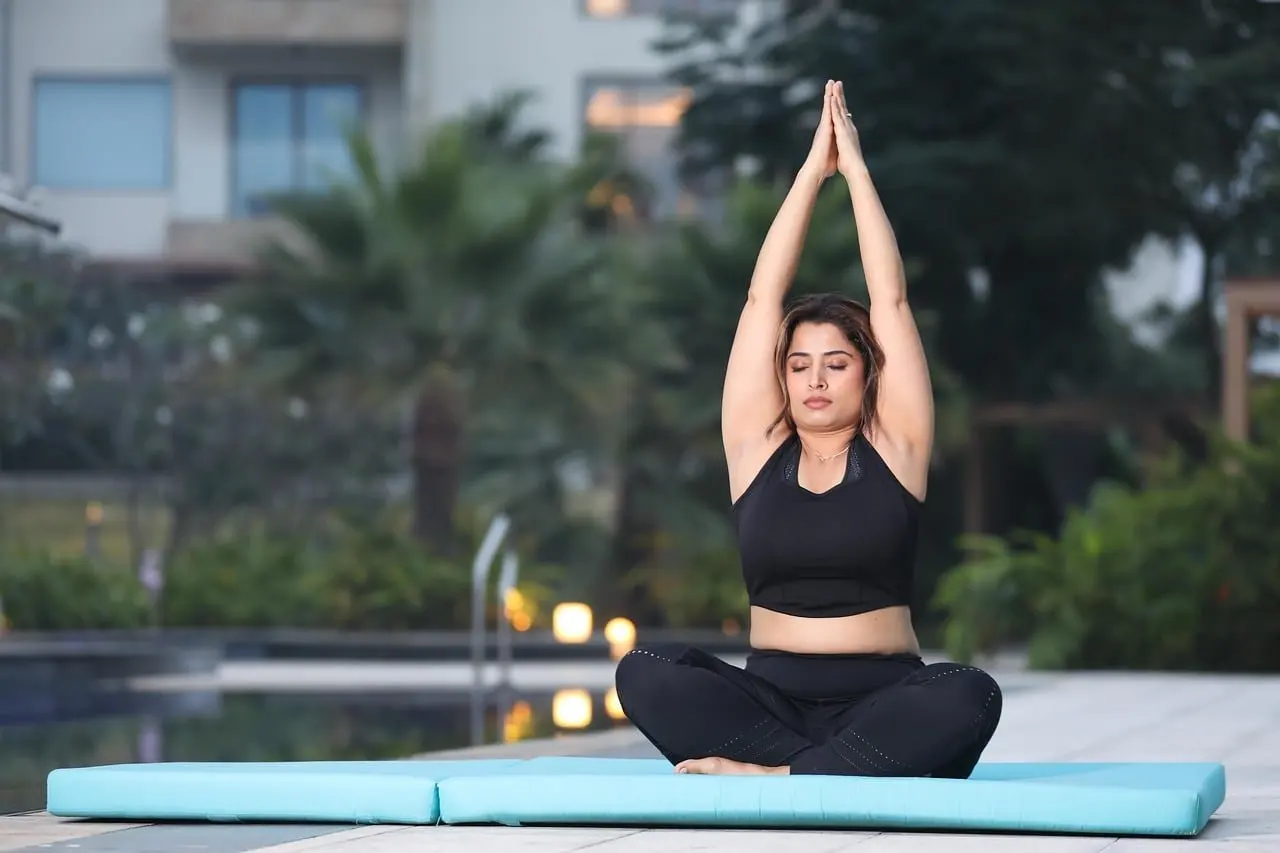
Healthline suggests starting with just 2–5 minutes a day focused on the breath. That is short enough to fit between tasks and long enough to notice how often attention wanders. Wandering is expected; the skill lies in noticing it and returning to the breath.
The same guide says that focusing on the present moment during practice enhances awareness, boosts concentration and centres the mind. That is the core of how yoga helps calm the mind. It gives attention one simple job, which interrupts the loop of rehearsing worries about the future or replaying the past.
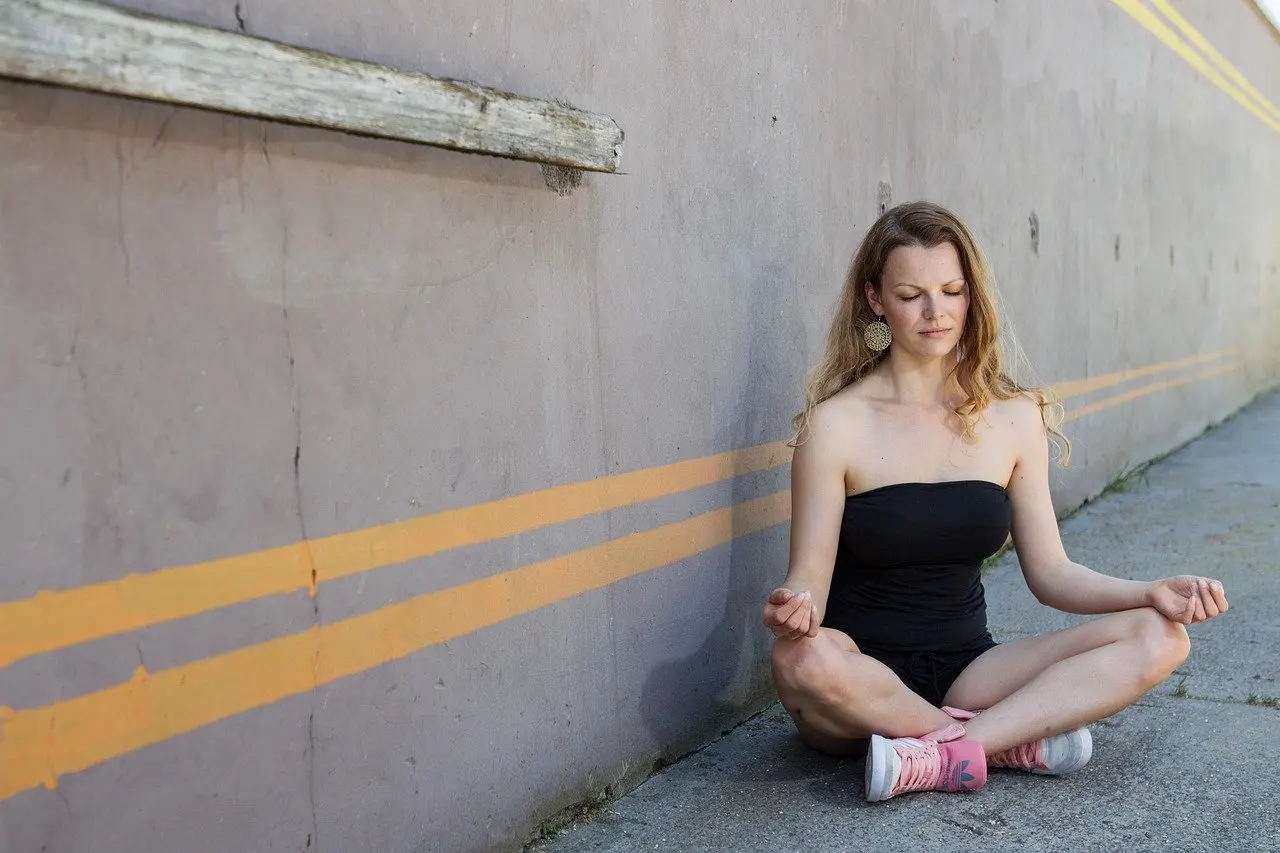
People who find stillness uncomfortable can try movement-based mindfulness instead. Mindful walking keeps the same present-moment focus but gives restless attention a physical anchor. Those who feel tension mainly in the body may prefer body scan meditation, which moves attention steadily through the body.
Poses to learn first
Gentle floor poses add a physical release to the breathing. The easiest are those with plain names and simple shapes, and the guide to basic yoga poses for beginners lists them with their names. Among them, child’s pose is the one most often recommended for stress. The table below shows how it compares with other options.
Comparing holds and durations
The practices in this guide differ mainly in how long they are held and what they ask of the body. The table gathers the durations that Healthline gives so that a short session can be planned around them.
| Practice | Typical hold or duration | Planning use |
|---|---|---|
| Breath-focused meditation | 2–5 minutes a day | The easiest starting point; fits into a break and builds the habit of returning attention to the breath. |
| Child’s pose | Up to 5 minutes | A resting pose for tension at any point in a session; the time is a ceiling, so shorter holds are fine. |
| Legs up the wall | Up to 15 minutes | Suits a wind-down after a long day; treat the figure as an upper limit, not a target. |
| Corpse pose | 10–20 minutes | Best as the final rest of a longer session, when there is time to lie still. |
These durations come from Healthline’s yoga-for-stress guide.
The phrase “up to” matters here. A short session of a few minutes in child’s pose does the job for most people, and no one needs to reach the maximum time to benefit. Corpse pose is the exception, because its stated range is itself a longer commitment. If twenty minutes of stillness is unrealistic on a given day, finish with a shorter rest and keep the breathing practice.
For a fuller sequence that strings these poses together with props, the page on restorative yoga sets out a routine. Restorative yoga for stress is attractive because it asks for so little effort: the work is in letting the body be supported.
Pregnancy and prenatal yoga
Pregnancy is a stage where yoga can be useful and where individual advice matters most. The question most people ask first is whether prenatal yoga is safe and when it can begin. The answer depends on the individual pregnancy, so the first step is a conversation with the doctor or midwife who provides antenatal care.

Healthline’s guidance applies directly: talk to your doctor before starting any yoga routine, especially if you have any health conditions or take medications. A pregnancy is a good reason to apply that advice even when there are no other conditions. The clinician knows the medical history and can say whether a gentle class suits the current stage.

Before the first class
Ask three practical questions at the antenatal appointment: whether yoga suits this pregnancy, whether any movements should be avoided, and whether any symptoms mean a session should stop. Taking the answers to the first session lets the instructor adapt the class.
Choose a class that is built for pregnancy rather than a general class with a few modifications. A trained prenatal instructor will already know how to adjust poses. Tell the instructor about the pregnancy before each session, and ask for alternatives whenever a pose feels uncomfortable.
What gentle practice can offer
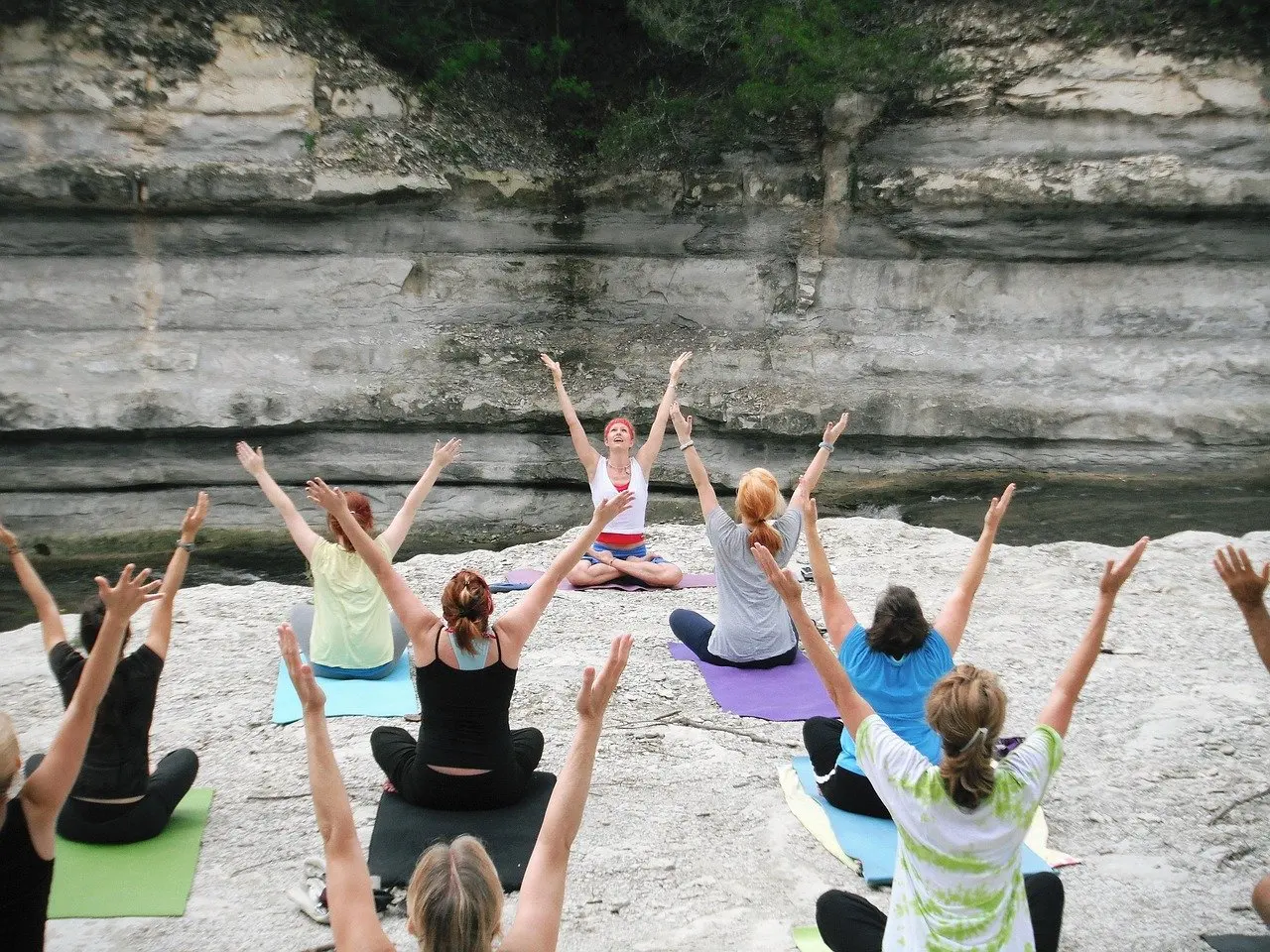
Yoga in pregnancy is mostly about calm, steady attention rather than physical challenge. The breathing exercises described earlier are useful because they need no exertion, and the supportive aspects of restorative work suit a body that needs more rest. Props such as bolsters and blankets allow someone to lie or sit comfortably while supported.
Group classes also bring social benefits. Meeting others at a similar stage can ease the sense of facing a major change alone, which relates directly to the review’s description of stress as strain from change.
After the birth
Recovery brings its own needs, and returning to practice gradually is usually sensible. The guide to yoga for pelvic floor covers recovery-focused practice. For the broken sleep that often accompanies a new baby, short evening sessions are easier to sustain than a full class, and the page on yoga for sleep suggests how to build them.
Coping with major change through mindfulness
Moves, new jobs, relationship changes and losses all fit the definition of stress as strain created by change. Mindfulness suits this kind of stress because it works on the present moment, which is the one place a person has any control when the future is uncertain. Healthline’s guide describes this present-moment focus as enhancing awareness and centring the mind, and that centring effect is what a person in the middle of upheaval needs most.
Keep control of the pace
A period of upheaval is a poor time to push through discomfort. One trauma-informed approach, taught by Chamomile Yoga in its 8-minute bedtime class, builds on the knowledge that students can skip, pause or take breaks at any time. That principle is useful beyond the class itself. It means a practice should feel like a choice, with permission to stop or leave out any part.
In practical terms, this favours short sessions over long ones, and open-ended practices over rigid targets. If a body scan stirs up difficult feelings, shifting attention to the feet on the floor or to a slow breath is a perfectly good response. Nothing about mindfulness requires finishing the exercise.
Use rest poses for the heavy days
On days when change feels overwhelming, the longer rest poses in the table above are well suited. Healthline gives corpse pose a stay of 10–20 minutes, and that quiet lying-down time can serve as a reset between demanding tasks. Where lying on the floor is not possible, a short seated meditation of 2–5 minutes a day is a smaller version of the same idea.
Evening is the natural time for this kind of practice. A short bedtime sequence lets the day end on something deliberate rather than on a screen, and an evening yoga routine to relax can be as simple as a few breaths, a rest pose and a quiet few minutes. The page on yoga for sleep extends this into a fuller bedtime plan.
When change brings anxiety
Change often brings worry as well as tiredness. Where anxiety is the main feeling, the breathing exercises above are the first tool, and the dedicated page on yoga for anxiety explains how to build them into a routine. The review quoted earlier notes that previous research found yoga can help with depression and anxiety, which supports using the practice alongside other support rather than in place of it.
Later life, sore backs and adapted practice
Yoga adapts well to stiffer joints and lower energy because the practice can be done at many intensities. The review reports a significant decrease in perceived stress and backache with yoga, so a gentle practice may suit people whose stress shows up as back tension. For specific back complaints, the guide on yoga for back pain goes further.
Start seated
People who find getting down to the floor difficult can begin on a chair. The page on chair yoga covers seated versions of familiar movements. Breathing exercises and breath-focused meditation need no change at all, so they can be done in a chair from the very first day.
Talk to a doctor if conditions apply
Health conditions and medications are more common in later life, which makes the doctor conversation even more relevant. Healthline’s advice to check before starting any yoga routine applies here as it does in pregnancy. If the doctor agrees, a class led by an instructor who understands adaptations is a safer way to learn than copying a video alone.
Hormonal change
Midlife brings physical and emotional shifts of its own. The guide to yoga for menopause looks at how a calm, regular practice can be tailored to that stage, while the same breathing and rest techniques described above remain a useful base.
Building a routine that lasts
A routine that survives a busy week is worth more than an ambitious one that is abandoned. The most dependable approach is to attach a short practice to something that already happens every day, and to treat longer sessions as a bonus.
- Morning. A short breathing practice before the day starts sets a calm tone. The page on a morning yoga routine offers a simple sequence.
- Midday. A few minutes of breath-focused meditation, in the 2–5 minute range that Healthline suggests, resets attention between tasks.
- Evening. Child’s pose and a longer rest pose bring the body down. This is where restorative yoga for stress fits most naturally.
Anyone hoping that yoga will also change body weight should read the guide on yoga for weight loss to set realistic expectations, since the stress-relief practices here are not designed with that goal in mind.
Choose the style that matches your energy
Slow, supported styles suit tired or tense days, while more active styles suit days with energy to spare. Comparing the main styles side by side helps, and the page on types of yoga does that. For stress, the quiet, slow end of the range is usually the best place to start.
When yoga adds stress
Practice should lower strain, not add to it. Healthline advises that if a yoga practice creates more stress in your life, you should talk to an instructor. Common causes include pushing into discomfort, comparing yourself with others in a class, or treating a daily session as another obligation.
The fix is usually to reduce the demand. Shorten the session, drop the harder poses and return to the breathing exercises that need nothing but attention. If a class feels wrong, a different instructor or style often changes the experience completely. A person who feels worse after practice, or whose health concerns are not addressed by yoga, should stop and seek medical advice.
Frequently asked questions
| Question | Answer |
|---|---|
| Can postures, breathing and meditation be done in the same session? | Yes. A review in PubMed Central notes that asana, meditation and pranayama can be practised separately or combined into a single session, so the mix can follow what feels manageable on the day. |
| Is the research on yoga and stress settled? | Not entirely. The same review reports a significant decrease in perceived stress and backache with yoga, but its authors recommend that future studies adopt more stringent yoga methods and suitable participant cohorts. Yoga is best treated as a helpful addition to other care. |
| Does yoga help with stress at every life stage? | The practices in this guide can be adapted to many stages, but the starting point changes. Pregnancy begins with a medical conversation, major change with control over pacing, and later life with seated or supported options. |